
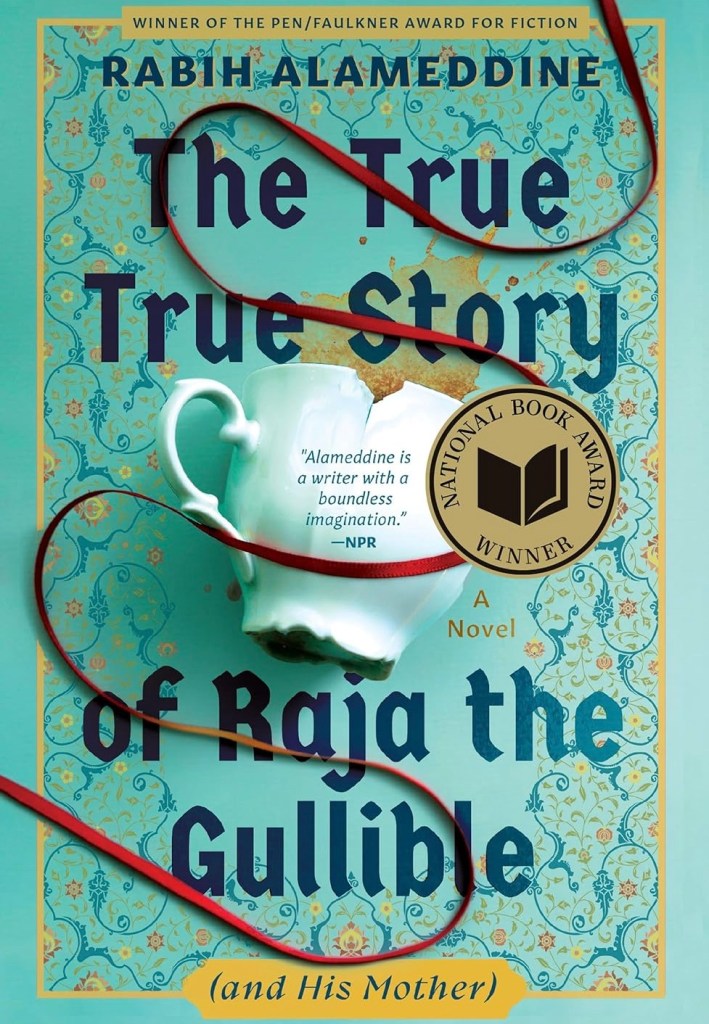
The True True Story of Raja the Gullible (nd his mother) is the tale of a 63 year old Lebanese man living with his mom in Beirut. It starts in 2023 but moves back and forth in time to provide context for all the things happening in the present.
As an adult, Raja is a teacher and his students love him. He speaks of them in that dismissive way that one does when not wanting to admit the extent of how much you care. His mother is always getting him to tell her things about his students and actually gets to know many of them. He lives in a small community where everyone knows everyone and their business.
There is much I did not know about Beirut and the things the people there have endured (corrupt politicians, a banking crisis, an immense explosion in the Beirut harbor). Raja goes through many difficulties as the story unfolds. The dialogue is snappy and it took me awhile to get used to that. Raja is a quirky character that grows on you. He is not predictable. He is not someone who forgives or turns the other cheek. The novel, in the end is a story about how our stories can define us. BUT we have the ability to influence our stories through our decisions. I have provided a link below to an interview with the author that I thoroughly enjoyed. I had not heard of this author previously. Will read him again. Thanks for the heads up about it Sharron.


 Tall Tales from Kansas
Leave a reply to Mary Ann Moss Cancel reply